Relics of Greece: Engineering the 22cm, 84g Blade of Olympus Metal Replica
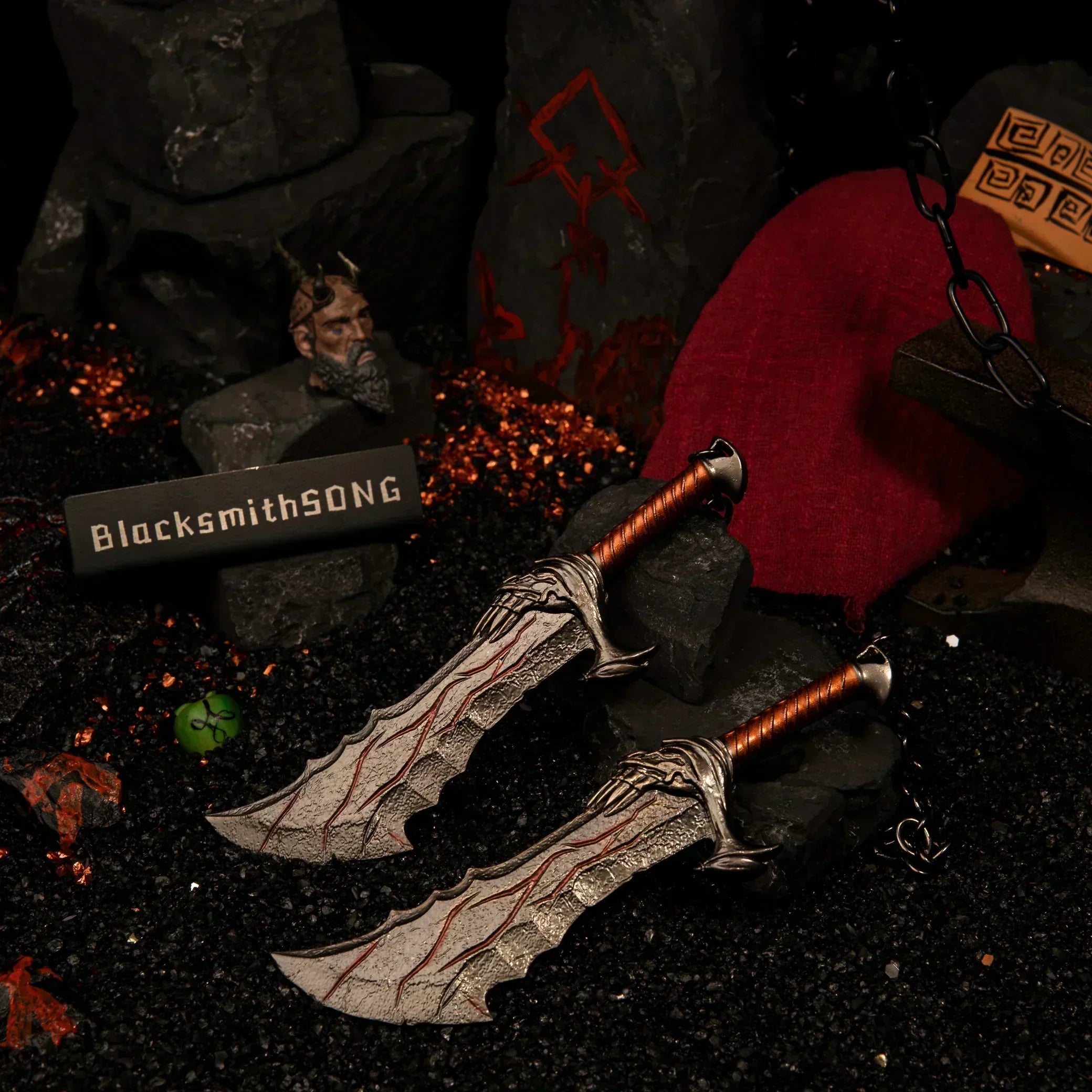
Welcome back to the forge, Ghost of Sparta. Recently, we’ve spent a lot of time reviewing the weapons of the Norse pantheon—we talked about the massive 35cm Draupnir Spear and the absurd 125g density of the Blades of Chaos.
But true God of War veterans know that before Kratos ever swung an axe in the freezing snow, he decimated an entire Greek pantheon with a weapon glowing with divine celestial power.
Today, we dust off the white ash of Greece to inspect the Blade of Olympus. Watch the forge-cam footage below. We recreated the ruins of Athens—complete with fallen marble statues and ancient pillars—to properly frame this relic.
The Forge Data: Divine Length vs. Angelic Weight
When we mapped out our Ultimate Replica Tier List, we classified the Blade of Olympus as a "Titan of Length." Let’s look at why its physical numbers break the rules of our forge.
| Weapon Classification | Length | Total Weight | Material Base | Finish / Visual Signature |
| Blade of Olympus | 22 cm | 84 g | Solid Zinc Alloy | Antique Gold Crossguard & Hollowed Energy Grooves |
| Mjolnir (For Context) | 13 cm | 118 g | Solid Zinc Alloy | Solid, blocky, maximum density |
Look at the absurdity in those numbers: The hammer is barely half the length of this sword, yet it outweighs it by 34 grams. Let me explain the engineering behind this intentional paradox.
Slender Lethality: Why 84 Grams is the Perfect Cut
When casting a heavy broadsword out of solid zinc alloy, the mold-making process usually demands a thick core to prevent the long tip from breaking. However, Kratos never used this sword as a blunt club. It’s an agile weapon made of pure magic and sharp geometry.
Check the hand-held scaling shot above.

At 22 centimeters, balancing this sword so it wouldn't be "blade heavy" (falling out of a display stand or dragging off a desk) meant removing raw metal mass. We engineered incredibly deep internal fullers (the channels running down the center of the blade) and incorporated "hollow" or relief features in the hilt. This allowed us to cast an impressive 22cm profile while dropping the total weight down to a swift, precise 84 grams. It feels like a surgeon's scalpel compared to our dwarven axes.
The Nightmare Crossguard: Electroplating the Agony
Any God of War purist knows that the hilt of this sword isn't just a handguard—it is a sculpture of agony. Look at the close-up hilt detail shot we captured in the ruins.

Translating that to miniature metal was our highest mold-failure risk for this series.
-
The Bi-Color Clash: To capture the Olympian divinity, we use a selective dual-electroplating method. The long, lethal edges remain a cold, bright silver, while the chaotic, twisted face and wing elements of the crossguard are dipped in a dark, antique gold wash.
-
The Energy Runes: You will notice ancient runes carved deep within the golden fuller on the flat of the blade. Rather than trying to paint these impossibly small lines, the patina wash pools deep into the zinc recesses, organically drawing the eye into the core of the weapon.
Staging the Demise of the Gods
At 22cm, this blade bridges the gap between desk paperweight and bookshelf centerpiece. As you can see from our vertical stand display, lifting the sword by its golden hilt allows the sleek blade to draw a striking downward vertical line in your room.

However, for those with the desk space, laying this god-slayer across white stone or Greek ruins (much like our studio shots) pays the highest tribute to the early PS2/PS3 eras that started the legend.
Midgard has plenty of weapons. Olympus only has one true ruler.
**Draw the Blade of Olympus for your own arsenal here (Link to Product Page). **
Looking to pair the old world with the new world? Drop back into our Full God of War Replica Catalog (Link to Collection page) to browse what the Norse dwarves have been forging while Olympus burned.